2026 Best Gym Flooring Why Is Rubber Better Than Foam?

Time:2026-11-24 Author:Sophia
0%

Choosing gym flooring is not just a matter of softness. It affects how weights land, how equipment stays in place, and how a room feels during daily training. When comparing rubber and foam, the question “why is rubber flooring better than foam for gyms” comes down to the work each surface must handle.

Rubber is dense and resilient. A loaded dumbbell is less likely to leave a deep dent, and rubber tiles can provide a steadier base beneath a squat rack. Foam feels softer underfoot, which may suit stretching or light bodyweight exercise. But under heavy equipment, softer panels can compress, shift, or show wear sooner. Details matter: thickness, density, backing, seams, and the subfloor can all change performance. Rubber is not automatically the best choice for every room.

A useful buying principle is simple: match the surface to the activity, not just the price or first impression. I can’t responsibly attribute a quotation to a named flooring expert without a verifiable source; no article or expert reference was supplied. That is a limitation worth acknowledging. Before choosing, check the product’s technical specifications and test a sample under the equipment you actually use. A floor should feel stable on day one—and remain practical after months of training.
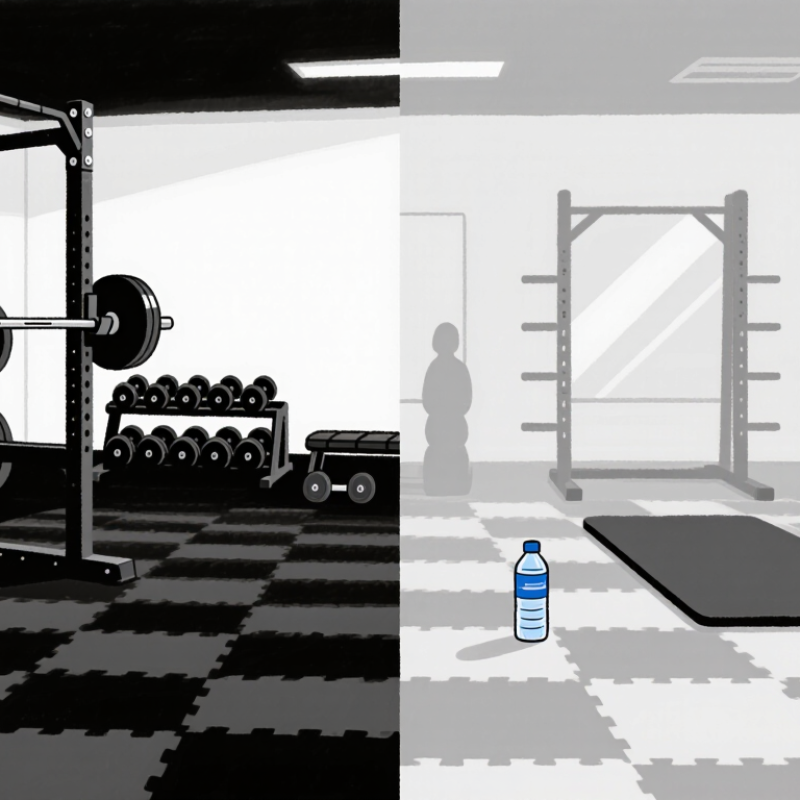
2026 Best Gym Flooring Why Is Rubber Better Than Foam?

Rubber vs. Foam: Compare Material Structure, Density, and Resilience

Rubber and foam may look similar on a gym floor, but their material structures behave differently. Rubber is a dense, elastic solid, often made with a textured surface for grip. Foam contains tiny air-filled cells. Press a thumb into it, and the surface gives way more easily. That softness can feel pleasant under stretching or bodyweight exercises.

Density matters when equipment hits the floor. A dense rubber tile usually spreads impact across a wider area and resists being crushed by heavy dumbbells. Foam is lighter and often cushions small impacts, but it may compress deeply beneath a rack or a dropped weight. Check the product’s stated thickness and density; thickness alone does not prove durability. A thick, soft mat can still bottom out. Details vary.

Resilience describes how a surface returns after pressure. Rubber tends to rebound steadily and hold its shape through repeated steps, though low-quality or poorly installed tiles can shift or wear. Foam often feels springier at first, yet repeated compression may leave dents. For a home gym, stand on a sample in training shoes and press it with a weight similar to your equipment. Notice the feel. I would not choose by softness alone: comfortable flooring can be the wrong choice for heavy lifting.

Impact Performance: ASTM F2772 Shock Absorption and Vertical Deformation

When a dumbbell drops, the floor does more than make noise. ASTM F2772 evaluates athletic flooring under defined test conditions, including shock absorption and vertical deformation. Shock absorption indicates how much impact force the surface reduces. Vertical deformation measures how far it yields under load. These results help compare surfaces, but they cannot predict every workout.

Rubber often feels firmer and more controlled than soft foam, especially beneath racks or during repeated foot traffic. Too much give can feel unstable during lunges or quick changes of direction. A dense rubber tile may reduce that wobble while still absorbing some impact. Yet thickness, composition, installation, and the subfloor all affect performance. No material wins by name alone.

Ask for ASTM F2772 results and details of the tested assembly, including thickness, backing, seams, and substrate. A lab result from one setup may not match your concrete slab. I would not treat one metric as a complete comfort score. Test a sample with movements you actually do. Feels solid? That matters, but so does stability under equipment loads. A softer surface may suit stretching areas; lifting zones usually need dependable footing.

Surface Hardness: Shore A Durometer Data Under ASTM D2240

Surface hardness is useful, but it is not a complete measure of gym-floor performance. ASTM D2240 measures indentation hardness with a durometer; it does not rate impact protection or comfort. Commercial rubber-flooring technical data sheets commonly report roughly 60–80 Shore A, though formulations and test conditions vary. Higher readings generally indicate a firmer surface. Small differences can matter.

Foam needs careful comparison. Many EVA foam specifications use Shore C, not Shore A, so the numbers cannot be compared directly across scales. ASTM International’s D2240 method also requires controlled test conditions; thickness, temperature, and specimen support can affect readings. A harder rubber tile may feel stable under a loaded rack, while softer foam can compress under a heel. Still, hardness alone can mislead. It is one measurement, not a verdict.

Tips: Request the test method, scale, and sample thickness with any hardness figure. Compare Shore A results with Shore A results. Check tiles underfoot and beneath equipment, too. Numbers help, but they do not tell the whole story.

Wear Resistance: ASTM D4060 Taber Abrasion and Mass-Loss Testing

Rubber gym flooring is often selected for busy weight rooms because its dense surface can resist scuffing from shoes and equipment. To measure abrasion, a laboratory may use a Taber Abraser under an ASTM D4060-based protocol. The method was developed for organic coatings, so flooring results should identify any adaptations. Test conditions matter. Wheel type, applied load, and cycle count can change the outcome. After testing, the sample is weighed, and mass loss is reported in grams. Lower loss means less material was removed in that specific test.

For a fair comparison with foam, test specimens should have consistent dimensions and conditioning. A foam surface may dent or tear under use, while rubber may show gradual wear; actual results depend on density, formulation, and surface structure. Look for the test settings alongside the mass-loss figure, not just a single number. A lab result cannot fully predict years of use. Grit under a rack, repeated foot pivots, and dragging plates create different wear patterns. That distinction is easy to overlook. A lower mass loss is useful evidence, but it is not a complete durability verdict.

2026 Best Gym Flooring: Why Is Rubber Better Than Foam?

Wear resistance can be compared by measuring specimen mass before and after abrasion. Lower mass loss indicates less material worn away.

Illustrative example only—not laboratory results or a product claim. The percentages are example calculations from a 100 g starting mass: 6% loss for rubber and 18% for foam. Actual results depend on the material and test conditions. ASTM D4060 results should be compared only when the wheel, load, and cycle count are the same.

Equipment Loads: ASTM F970 Static-Load Testing and Residual Indentation

A loaded squat rack can press the same small points into flooring for months. ASTM F970 offers a controlled way to assess how resilient flooring responds to static loads. A laboratory applies a defined load through a specified contact area, then measures indentation after the load is removed. That remaining dent is residual indentation. It matters because a floor that looks fine underfoot may still show lasting marks beneath rack feet or a storage stand.

Read the test report, not just the standard number. Check the tested thickness, load, contact size, and recovery period; results depend on those conditions. Rubber often resists concentrated equipment loads better than soft foam, but the material name alone proves little. Density, construction, and installation all matter. Foam may cushion movement well, yet compress more under a heavy, unmoving base. Not always. I would still compare like-for-like test data and inspect the floor after equipment has been moved. A laboratory result is useful, but it cannot perfectly reproduce uneven slabs, shifting racks, or years of repeated use. No floor is indestructible.

FAQS

What does ASTM F2772 evaluate in athletic flooring?

It measures shock absorption and vertical deformation under defined test conditions. These results help compare surfaces, but they cannot predict every workout.

What is the difference between shock absorption and vertical deformation?

Shock absorption indicates how much impact force a surface reduces. Vertical deformation measures how far it yields under load. Not the whole story.

Why might rubber feel steadier than soft foam?

Dense rubber often feels firmer beneath racks and busy foot traffic. Too much give can feel unstable during lunges or quick turns. I may give firmness too much credit; the full setup matters.

What details should I check in flooring test results?

Check thickness, backing, seams, and substrate. A result from one assembly may not match your concrete slab. Small details matter.

Should I test a flooring sample before choosing?

Yes. Try movements you actually do, such as lunges and quick direction changes. Check footing under equipment loads, too. Feels solid? Useful, but not a complete performance measure.

What does ASTM D4060 abrasion testing show?

A lab measures the sample’s mass loss after abrasion, usually in grams. Lower loss means less material was removed under those specific test conditions.

Which settings should accompany an abrasion test result?

Ask for the wheel type, applied load, and cycle count. ASTM D4060 was developed for organic coatings, so flooring adaptations should be identified.

Does lower mass loss guarantee longer flooring life?

No. Grit under a rack, repeated foot pivots, and dragged plates create different wear patterns. Lab results help, but they do not tell the whole story.

Conclusion

Choosing the right gym flooring means balancing impact protection, stability, durability, and equipment support. Rubber and foam differ in structure, density, and resilience: rubber is typically denser and more resistant to compression, while foam often feels softer but may deform more under repeated use. This helps explain why is rubber flooring better than foam for gyms: for many workout spaces, its firmer, more resilient surface can provide a dependable base for training and heavy equipment.

A careful comparison can look at shock absorption and vertical deformation under ASTM F2772, surface hardness using Shore A measurements under ASTM D2240, and wear through ASTM D4060 Taber abrasion and mass-loss testing. For equipment areas, ASTM F970 static-load testing can assess residual indentation after a load is applied. Results depend on the flooring product and test conditions, so these measures are useful for comparing performance rather than assuming every rubber surface outperforms every foam option.

Sophia

Sophia

Sophia is a dedicated marketing professional with an exceptional depth of knowledge about her company's products and services. With a keen understanding of market trends and customer needs, she crafts insightful blog posts that not only inform but also engage readers, enriching the company’s online......