For facility managers asking “what is the lifespan of commercial office carpets,” the practical answer is often five to ten years. Treat that as a planning range, not a promise. The Carpet and Rug Institute’s Carpet Maintenance Guidelines emphasize that cleaning methods and schedules should match carpet use and conditions. The IICRC S100 Standard for Professional Cleaning of Textile Floor Coverings likewise provides a professional framework for maintaining textile flooring. Neither makes every office carpet wear out on the same date.
Traffic leaves visible clues. A darkened path from reception to the elevators, flattened pile beside a copier, or grit gathered at an entrance can signal concentrated wear. Tom Jennings, a carpet-care specialist associated with the Carpet and Rug Institute, has emphasized that regular vacuuming is central to extending carpet life. That matters most where shoes track in soil every day. Small details count.
A five-year-old carpet in a busy lobby may look more tired than a ten-year-old carpet in a lightly used meeting room. Fiber type, backing, installation, spills, maintenance, and furniture movement all affect service life. The estimate is imperfect. That is worth remembering. A replacement schedule based only on age can waste usable flooring, while ignoring worn seams, persistent stains, or safety concerns can delay needed work. Use inspections and maintenance records alongside the five-to-ten-year benchmark, and document what you see underfoot.
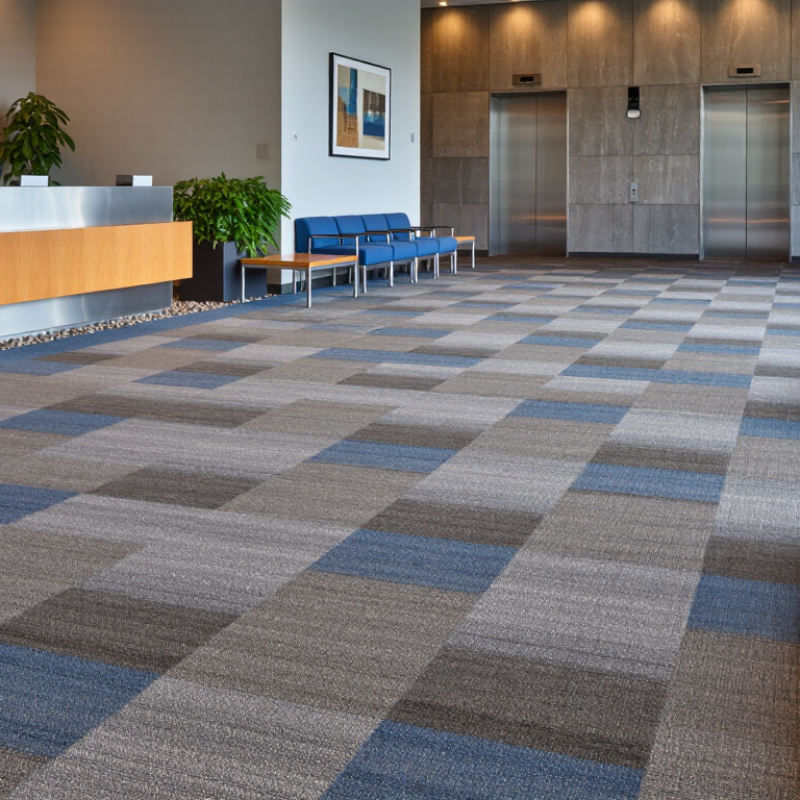
Commercial carpet service life is commonly framed as a five-to-ten-year industry benchmark. The U.S. EPA’s Waste Reduction Model (WARM) uses an eight-year average carpet lifetime in its materials-management calculations. That is a planning assumption, not a guaranteed replacement date. Real floors vary. A carpeted corridor carrying carts and wet shoes will wear differently from a lightly used office. Traffic concentration, soil, moisture, and maintenance all affect how quickly fibers flatten or backing deteriorates. The benchmark is useful, but blunt.
The Carpet and Rug Institute’s carpet-maintenance guidance emphasizes routine vacuuming, prompt spill treatment, and scheduled deep cleaning. Those practices target the grit that cuts fibers and the stains that become harder to remove over time. A practical assessment should include more than age: inspect traffic lanes, seams, edges, odors, and whether cleaning restores appearance. A lobby may look tired before a private office does. Conversely, an older carpet can remain serviceable when it is clean, secure, and performing well. That judgment is not always neat. For budgeting, use five to ten years as a review window, then base replacement decisions on documented condition and actual use.
Commercial office carpet usually wears out first where people walk most, not across the whole room. Entryways collect grit from shoes. Hallways take repeated footsteps, while corners under desks may stay nearly unchanged. A busy reception area can look tired years before a quiet meeting room. Traffic matters, but the type of traffic matters too. Rolling chair casters press and twist fibers in small, repeated paths. Dirt acts like fine sand, cutting at fiber surfaces as people walk over it. Small details add up. It happens gradually.
Carpet construction changes how well it handles that pressure. Dense, tightly twisted fibers often resist crushing better than loose, low-density pile. Loop constructions can hide footprints, though they may snag around sharp furniture edges. Fiber type, pile height, backing, and installation all affect performance. No single feature guarantees a longer life. Maintenance matters, too: vacuuming removes grit, and prompt cleaning limits stains, but unsuitable methods can cause damage. In practice, a five-to-ten-year lifespan is only a rough range. I would inspect traffic lanes and seams regularly; appearance alone can be misleading. Some carpets look worn before they fail, while others show damage underneath.
| Traffic Level | Typical Office Areas | Suitable Carpet Construction | Indicative Service Life | Main Wear Factors | Maintenance That Helps |
|---|---|---|---|---|---|
| Low | Private offices and lightly used meeting rooms | Dense loop pile or cut-and-loop carpet with durable commercial-grade face fiber | 8–10 years | Furniture movement, sunlight, spills, and wear at room entrances | Vacuum regularly, use chair mats where needed, and treat spills promptly |
| Moderate | Shared offices, corridors with limited use, and small conference rooms | Dense, low-profile loop pile or commercial carpet tile | 7–9 years | Repeated foot traffic, rolling chairs, and gradual soil buildup | Use entrance mats, vacuum high-use routes frequently, and schedule periodic deep cleaning |
| High | Main corridors, reception areas, and busy meeting spaces | Dense, low-profile loop construction; carpet tile can simplify localized replacement | 5–7 years | Compressed pile, tracked-in grit, turning traffic, and concentrated wear paths | Keep entrance systems clean, increase vacuuming in traffic lanes, and replace badly worn tiles when practical |
| Very high | Elevator lobbies, building entrances, and heavily used circulation routes | Commercial-grade, low-profile loop carpet tile with a durable backing system | 5–6 years in the busiest zones; longer in adjacent areas | Abrasive dirt, moisture, frequent pivoting, and continuous footfall | Maintain effective walk-off mats, remove grit often, respond quickly to moisture, and inspect wear zones regularly |
Note: Service-life figures are indicative planning ranges, not guarantees. Actual life depends on traffic, carpet quality and installation, soil control, cleaning frequency, and maintenance practices. High-traffic areas may need repair or replacement before the rest of the office.
Commercial office carpet may be expected to serve for five to ten years, but calendar age alone says little about its condition. ASTM D5252 offers a controlled way to examine appearance retention with a hexapod tumbler tester. In the apparatus, a carpet specimen undergoes repeated tumbling and contact with studded surfaces, creating a consistent form of mechanical wear. The test supports comparison; it does not predict an exact replacement date.
After testing, evaluators inspect changes such as pile distortion, matting, and reduced visual uniformity. They judge the specimen using a defined appearance scale. That matters. Results help compare carpet constructions under similar conditions, but they depend on specimen preparation, test settings, and rating consistency. Conditions still vary. Careful documentation helps make results more useful.
A strong rating may support a longer service-life expectation, especially when entry mats, regular vacuuming, and prompt stain care reduce wear. Yet a lab tumbler cannot reproduce every office. Rolling chairs, grit at entrances, spills, sunlight, and uneven foot traffic complicate the picture. A busy corridor may wear faster than a lightly used meeting room. The test informs a decision; it does not settle it. In practice, inspection records and maintenance history still matter.
Commercial office carpet may last five to ten years, but care strongly affects that range. CRI maintenance guidance emphasizes routine vacuuming and planned deep cleaning, rather than waiting for visible wear. Daily vacuuming removes grit before shoes grind it into the pile and backing. Dust adds up. Give extra attention to entrances, corridors, printer areas, and spots beneath desk clusters. Slow, overlapping passes usually collect more soil than a quick sweep.
Choose vacuum frequency by traffic, not calendar alone. Busy lobbies often need daily attention; quiet rooms may need less. Use equipment suited to the carpet, and empty its collection bin before suction drops. Blot fresh spills promptly instead of rubbing, and test cleaning solutions in an inconspicuous area. Small spills matter. In line with CRI maintenance guidance, schedule deep cleaning according to soil levels and carpet condition, following the carpet’s care instructions.
Hot-water extraction or another compatible method can remove embedded soil that vacuuming leaves behind. Frequency varies; high-traffic offices may need more frequent service than lightly used suites. Allow enough drying time, and keep people off damp areas to limit resoiling. A written log helps staff track cleaning dates, stains, and recurring problem zones. Schedules need adjustment. Even disciplined care cannot prevent every crushed fiber or furniture mark, and some stains will remain. That imperfect reality is worth recording, not hiding.
Carpet age alone is a poor replacement test. Inspect busy routes from the entrance to reception: flattened pile, exposed backing, and gray traffic lanes that remain after cleaning suggest wear has reached the fiber structure. The Carpet and Rug Institute recommends professional cleaning roughly every 12 to 18 months, adjusted for traffic and soil. If a carpet still looks dirty soon after proper cleaning, repeated maintenance may no longer be enough. Check a quiet corner too. It shows what the pile looked like before years of foot traffic.
Look closely at seams near doorways and chair paths. Gaps, fraying edges, or lifted joins can catch shoes and spread damage; a qualified flooring professional can assess whether repair is practical. Persistent stains deserve a closer look, not just another chemical treatment. The IICRC S100 standard provides professional guidance for inspecting and cleaning textile floor coverings, including evaluating the material and soil before treatment. A stain that returns after drying may involve residue or contamination below the visible surface. Sometimes it is permanent. That is frustrating, but useful to know. Record the affected area, cleaning history, and remaining carpet condition before deciding: one stained panel may justify a localized repair, while widespread wear and failed seams point toward replacement.
Typical replacement window: Commercial office carpets commonly last about 5–10 years, depending on traffic, maintenance, and carpet construction. Visible wear, damaged seams, and persistent stains can indicate that replacement should be considered; the age range is a guide, not a guaranteed deadline.
A common planning range is five to ten years. One materials model uses an eight-year average. That is not a deadline.
Check traffic lanes, seams, edges, odors, and cleaning results. Age alone is blunt. An older carpet may still perform well.
Entryways and hallways often show wear early. Grit from shoes acts like fine sand. Reception areas may fade before quiet offices.
Dense, tightly twisted fibers often resist crushing better. Loop styles can hide footprints but may snag on sharp furniture edges. No feature guarantees long life.
Vacuuming removes grit that can cut fibers. Prompt spill treatment helps limit stains. Unsuitable cleaning methods can cause damage. It is not a cure-all.
Consider replacement when cleaning no longer improves appearance or when seams and backing show problems. Base the decision on documented condition and use.
Yes, if it remains clean, secure, and functional. A calendar date cannot tell the whole story. I would still inspect it closely.
Some carpet looks worn before it fails. Other damage may hide beneath the surface. One glance is not enough.
Commercial office carpets typically last 5 to 10 years, but the exact service life depends on foot traffic, carpet construction, and maintenance. Dense, durable materials may withstand busy areas better, while heavy daily use can accelerate wear. ASTM D5252 hexapod testing offers a standardized way to assess how well carpet retains its appearance under simulated traffic, helping explain why two carpets in similar offices may age differently.
To extend carpet life, follow a consistent care routine that includes daily vacuuming and scheduled deep cleaning. Regular maintenance removes soil before it becomes embedded and helps preserve the carpet’s appearance. Replacement may be necessary when visible wear, damaged seams, or persistent stains remain despite cleaning. In short, what is the lifespan of commercial office carpets depends not only on the product itself, but also on how intensively it is used and how well it is maintained.
Pelvic Floor