Why use shock-absorbent flooring for weightlifting? The answer begins beneath the bar. Every deadlift, clean, and dropped plate transfers force into the floor. Concrete may look durable, but it reflects impact sharply through platforms, joints, and equipment.
The International Health, Racquet & Sportsclub Association reported 72.9 million United States fitness-facility members in 2022. More users mean more repeated loading, especially in busy strength areas. The American College of Sports Medicine also recommends safe, well-maintained training environments, including suitable surfaces and equipment spacing. Flooring is not decoration.
Sports scientist Dr. Stuart McGill has repeatedly emphasized a practical principle: “The body adapts to the loads imposed on it.” In weightlifting, the surface helps shape those loads. Dense rubber tiles can reduce vibration, protect subfloors, and improve traction under wet or dusty shoes. They also soften the landing when a lifter safely releases a heavy bar.
The details matter. A 30-millimeter rubber tile feels different from a thin gym mat. It should resist compression, remain stable, and avoid curling at the edges. Poor installation can create trip points. Rubber is not magic.
A properly designed lifting floor can also reduce noise in apartments, schools, and multi-use facilities. That improves the training experience for everyone nearby. However, flooring cannot correct weak technique, unsuitable footwear, or overloaded equipment.
This is why use shock-absorbent flooring for weightlifting: it manages impact, supports stable movement, and protects the facility over time. The best choice still depends on load frequency, barbell type, subfloor construction, and ventilation.
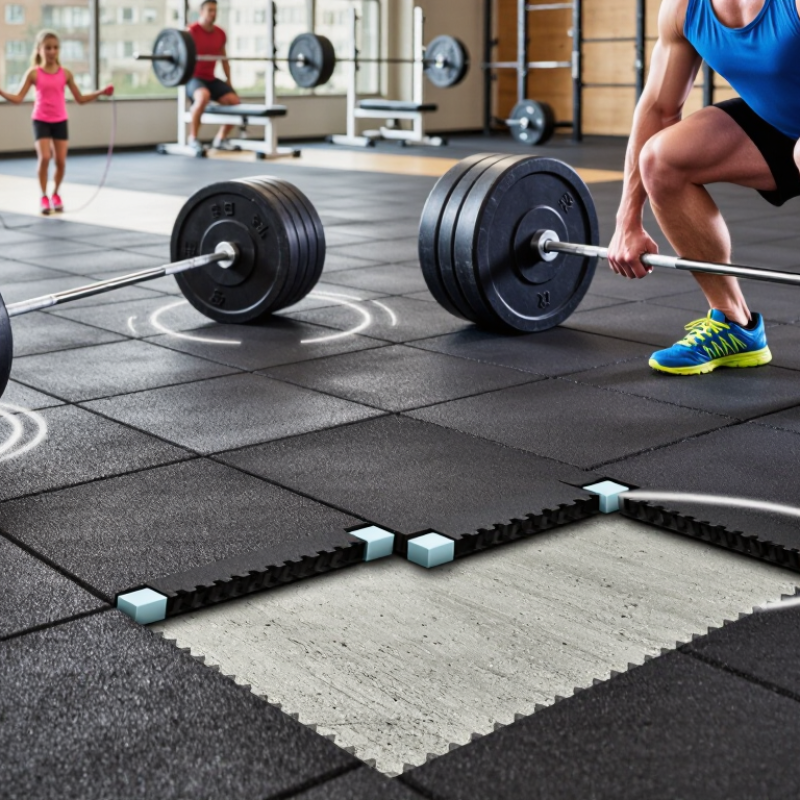
Shock-absorbent flooring for weightlifting is a layered surface designed to soften impact when weights are dropped. It commonly uses dense rubber tiles or rolls over a stable subfloor. The rubber compresses slightly, spreading force across a wider area. This helps protect concrete, reduce vibration, and limit sharp noise in busy training rooms.
Thickness matters. Heavy lifting areas usually need thicker flooring than general fitness spaces. A firm surface supports balance, while enough cushioning protects the floor and equipment. However, soft does not always mean safer. Excessive compression can make foot placement feel unstable. The best flooring matches the lifting style, barbell load, room structure, and expected traffic. It should also resist moisture and remain easy to clean. Flooring alone cannot prevent every injury.
Tips: Check the subfloor before installation. It should be level, dry, and free from loose debris. Leave tight seams and exposed edges uncorrected, and problems may appear quickly. Test a small area with your actual equipment first. Notice how the floor feels during squats, deadlifts, and controlled drops. I would also review the manufacturer’s technical data, even when the material looks tough. Small differences in density can change comfort, stability, and long-term performance. Familiar materials can still surprise you.
Weightlifting creates sharp, repeated impacts. Shock-absorbent flooring helps manage them. When a barbell hits the ground, dense rubber compresses and spreads the force across a wider area. This reduces stress on concrete, tiles, and joints beneath the platform. It also limits unwanted bar bounce, giving lifters better control after a failed or heavy repetition.
For lifters, protection begins under the feet. Textured flooring provides stable contact during deadlifts, squats, and Olympic lifts. A secure surface can reduce slipping when sweat or chalk reaches the floor. It may also reduce vibration through the ankles and knees, although flooring cannot replace proper technique or suitable footwear. The surface should feel firm, not soft like a mat.
Equipment benefits as well. Repeated drops can chip plates, bend bar sleeves, and damage collars over time. Shock-absorbent flooring cushions these impacts and helps protect the subfloor from cracks. I once assumed thicker flooring was always better. That was too simple. Density, installation, seams, and maintenance matter just as much. A loose edge or small gap can create a trip hazard. Regular inspection remains necessary, because even durable flooring eventually wears.
Why Use Shock Absorbent Flooring for Weightlifting?
Dropping a loaded bar creates a sharp impact, not just a loud sound. Shock absorbent flooring spreads that force across a wider area. It can reduce vibration traveling through slabs, walls, and nearby equipment. This matters in apartments, clubs, and training rooms above occupied spaces.
The National Institute for Occupational Safety and Health identifies 85 dBA over eight hours as a recommended exposure limit. A busy lifting room can approach that level through plates, music, and repeated impacts. Flooring cannot control every sound. However, dense rubber layers can soften the initial strike and reduce the harshness of metal-on-concrete contact. ASTM F1292 impact-attenuation testing also shows why laboratory ratings matter. Still, a certified result may not match an old building with flexible floors. That difference deserves attention.
Tips: Choose flooring with documented impact-attenuation and force-reduction results. Use thicker zones under platforms and deadlift areas. Keep plates close to the surface before release. Check seams, gaps, and subfloor movement every month. A simple vibration test helps: place a half-filled water bottle nearby during controlled lifts. Visible ripples suggest energy is traveling through the structure. This is not a scientific measurement, but it reveals problems quickly. Pair the floor with acoustic wall panels, controlled lifting habits, and scheduled equipment checks. Expect improvement, not silence.
Shock absorbent flooring protects lifters, equipment, and the building beneath heavy training. The right material matters more than appearance. Dense rubber tiles or rolls usually provide dependable impact control and traction. Recycled rubber is practical and resilient, while higher-density rubber often feels firmer underfoot. Softer foam may feel comfortable, but it can compress under repeated loads.
Thickness should match the lifting style and subfloor. For general strength training, 15 to 20 millimetres may be sufficient over a sound concrete slab. Frequent deadlifts and dropped weights usually need 25 to 40 millimetres. A dedicated lifting platform may require thicker rubber around the impact area. Check the floor underneath first. Cracks, moisture, or uneven concrete can reduce performance.
I once assumed thicker flooring was always safer. That choice was not perfect. Excessively soft surfaces can reduce stability during squats and pulls. They may also develop dents where racks remain installed. Measure the rack footprint, plate impact zones, and available door clearance before ordering. Tight seams help prevent dust and moisture from entering below the floor. Secure heavy sections without creating raised edges. Test a small area with your actual equipment, because laboratory ratings do not always match daily training. A flooring professional can verify density, compression, and installation requirements when the subfloor is uncertain.
Comparison of common flooring materials for weightlifting areas. Performance values are typical industry ranges and may vary by product construction, subfloor, temperature, and installation quality.
| Flooring Material | Typical Thickness | Impact and Noise Control | Suitable Training Use | Key Advantages | Limitations | Recommended Installation |
|---|---|---|---|---|---|---|
| Recycled Rubber Tiles | 15–30 mm 0.59–1.18 in |
High impact resistance; reduces vibration and dropped-bar noise better than thin resilient flooring. | Free-weight rooms, strength-training areas, squat racks, and general weightlifting. | Durable, replaceable individual tiles, good load distribution, and strong resistance to compression. | Heavy tiles can be difficult to move; may have an initial rubber odor; seams can collect debris if poorly fitted. | Install on a clean, level, dry subfloor. Use tight joints and secure high-traffic edges. |
| Rolled Rubber Flooring | 6–15 mm 0.24–0.59 in |
Moderate to high impact and sound reduction, depending on thickness and rubber density. | Commercial gyms, fitness studios, machine areas, and moderate free-weight use. | Fewer seams than tiles, easy to clean, smooth appearance, and efficient coverage of large spaces. | Less protective than thick rubber under repeated heavy drops; damaged sections may require larger-area replacement. | Fully adhere or carefully secure the roll to prevent movement, curling, and trip hazards. |
| Vulcanized Rubber Sheets | 8–20 mm 0.31–0.79 in |
High resilience and consistent shock absorption, with good resistance to permanent deformation. | Olympic lifting platforms, strength zones, and areas requiring a cleaner, more uniform surface. | High wear resistance, stable dimensions, and consistent performance across the sheet. | Usually costs more than basic rubber flooring; requires accurate cutting and careful seam treatment. | Use over a structurally sound subfloor; bond seams or use a compatible transition system where required. |
| Interlocking EVA Foam | 10–25 mm 0.39–0.98 in |
Good cushioning for light impacts, but limited protection against concentrated loads and heavy barbell drops. | Body-weight exercise, stretching, mobility work, and light dumbbell training. | Lightweight, economical, easy to install, and comfortable for floor-based exercises. | Can dent, tear, or compress under racks and heavy equipment; generally unsuitable as the sole surface for heavy lifting. | Use only on a smooth, level subfloor and keep away from sharp equipment feet and repeated heavy drops. |
| Rubber-and-Foam Composite System | 20–50 mm 0.79–1.97 in |
Very high impact and vibration control when correctly engineered as a layered system. | Dedicated weightlifting platforms, high-intensity lifting zones, and locations below which vibration is a concern. | Combines resilient cushioning with a durable wear layer; can improve protection for the subfloor. | Higher cost and installation complexity; excessive softness may affect lifting stability. | Follow the system manufacturer’s compression and load requirements; verify platform stability before use. |
| Hardwood Platform with Rubber Drop Zones | Rubber zones: 20–40 mm 0.79–1.57 in |
High protection at the barbell landing points while preserving a firm, stable lifting surface. | Olympic weightlifting, powerlifting, and structured lifting platforms. | Excellent stability, clear lifting area, attractive appearance, and targeted impact protection. | Requires precise construction; exposed wood needs maintenance and can be damaged by moisture or poor cleaning practices. | Use a rigid, level platform with equal-height rubber sections to avoid uneven transitions. |
| Concrete with Thin Protective Mat | Mat: 6–10 mm 0.24–0.39 in |
Low to moderate shock absorption; provides limited protection for the concrete and equipment. | Light dumbbell work, fixed-weight areas, and low-impact fitness activities. | Low cost, easy cleaning, and minimal floor height increase. | Does not adequately absorb repeated heavy drops; transfers more vibration and noise to the structure. | Use only where dropping weights is prohibited or tightly controlled. |
Practical selection rule: For regular heavy barbell lifting, a 15–30 mm rubber surface is a common starting point. Areas where weights may be dropped repeatedly often benefit from thicker rubber, a dedicated platform, or a tested rubber-and-foam system. Always confirm the flooring’s load rating, compression behavior, fire requirements, and compatibility with the building subfloor before installation.
Shock absorbent flooring protects lifters, equipment, and the subfloor during repeated drops. Installation begins with a clean, dry, and level surface. Dust under one tile can create movement and uneven seams. Measure the room carefully, then leave the recommended expansion gap near walls. Tight edges may buckle when temperatures change. Allow the flooring to acclimate indoors before fitting it. This small step is easy to overlook.
During installation, stagger the seams and press each section firmly into place. Check transitions around racks, platforms, and doorways. A slight height difference can catch a shoe or trap cleaning water. I have seen rushed layouts fail because heavy equipment rested across unsupported edges. The mistake was not dramatic at first. It became obvious after months of shifting.
Maintenance should be simple but consistent. Sweep loose grit daily in busy training areas. Grit behaves like sandpaper beneath loaded plates. Clean spills quickly with a damp mop and a mild, material-safe solution. Avoid soaking the joints. Inspect high-impact zones every few weeks for curling, gaps, or soft spots. Rotate movable platforms when practical to distribute wear. Even good flooring needs attention.
Long-term performance depends on ventilation, stable indoor conditions, and sensible equipment placement. Keep sharp metal edges from dragging across the surface. Replace damaged sections instead of hiding them under mats. Record inspections with dates and photographs. This creates useful evidence when performance changes. No flooring lasts forever, and expecting zero maintenance is unrealistic.
It compresses under impact and spreads force across a wider area. This helps protect concrete, tiles, and joints below.
Textured surfaces provide firmer contact during squats, deadlifts, and Olympic lifts. A stable floor may reduce slipping from sweat or chalk.
No. It may reduce vibration, but it cannot correct poor technique or unsuitable footwear. Technique still matters.
It cushions repeated drops and may reduce damage to plates, bar sleeves, and collars. It also helps limit unwanted bar bounce.
Not necessarily. Density, seams, installation, and maintenance also affect performance. I once assumed thickness solved everything. That was too simple.
The subfloor should be clean, dry, and level. Dust beneath one tile can cause movement and uneven seams.
Loose edges, open gaps, and uneven transitions may catch shoes or hold cleaning water. Leave the recommended expansion gap near walls.
Sweep loose grit regularly, especially in busy areas. Grit works like sandpaper beneath loaded plates. Clean spills quickly with a damp mop.
Check high-impact areas for curling, gaps, soft spots, and shifting sections. Record dates and photographs. Small defects can become obvious later.
Keep indoor conditions stable and avoid dragging sharp metal across the surface. Replace damaged sections instead of hiding them under mats. No flooring lasts forever.
Shock-absorbent flooring for weightlifting is a specially designed surface that helps reduce the force created when weights are dropped or equipment is moved. Made from resilient materials with suitable density and thickness, it absorbs impact instead of allowing energy to transfer directly to the floor, platforms, or surrounding structures. This helps protect lifters by improving stability and reducing excessive strain on joints, while also minimizing damage to weights and subflooring.
The key reasons why use shock-absorbent flooring for weightlifting include better control of noise, vibration, and impact. It can make training areas more comfortable for users and less disruptive to nearby spaces. Choosing the right material and thickness depends on lifting style, equipment weight, floor condition, and training frequency. Proper installation, regular cleaning, and timely inspection are also important for maintaining performance. With suitable care, quality flooring can provide reliable protection, improved training confidence, and long-term durability in both home and professional lifting environments.

Pelvic Floor